
For that one moment, ‘in and out of time’,
On that one mountain where all moments meet,
The daily veil that covers the sublime
In darkling glass fell dazzled at his feet.
There were no angels full of eyes and wings
Just living glory full of truth and grace.
The Love that dances at the heart of things
Shone out upon us from a human face
And to that light the light in us leaped up,
We felt it quicken somewhere deep within,
A sudden blaze of long-extinguished hope
Trembled and tingled through the tender skin.
Nor can this blackened sky, this darkened scar
Eclipse that glimpse of how things really are..”
– Transfiguration, Fr. Malcom Guite
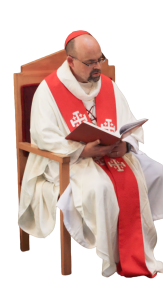 The spiritual path has an artistic quality in which as the priest and poet quoted above notes separately in his excellent talks about the imagination, that part of making art is the viewing of art, that is, the act of receiving art is a part of the creation process – it is not complete until it is read, heard, spoken, seen or touched. The beholder completes the process.
The Gnostic path, and even the Christian path, has a similar quality. On the latter you can consider the myriad expressions of sacred art and iconography filtered through the lens of separate and distinct histories and cultures – that in each place in which it is to be found, there is an expression that is unique to its place and time and yet linked to all other instances. On the former, it is also true- because Gnosis is a “liberating, transcendent and experiential” awareness of spiritual reality – but it is always only ever mediated through the subjective experience and lens of individual life and consciousness. It is both transcendent and immanent, universal and personal, at the same time.
Some of the key moments on the liturgical calendar are the year to year cycle of events that play out in the life of Jesus, particularly through the canonical Gospels, but also, in our communion, through those powerful works found in the Nag Hammadi corpus. Even the most nominal of Christians can tell you about the canonical version of these key moments – the birth, the death, and the resurrection of Jesus. Less focused on, at least in my experience- is that key moment of the Transfiguration.
The Transfiguration is the event in the story of Jesus where the inner circle of his disciples, for a powerful moment, see the incarnate Divine as it really is. In the Christology of the mystic and monastic Bernadette Roberts, Christ is what happens when humanity and divinity meet. This is what the Transfiguration portrays in narrative form. In eastern Christian mysticism, namely that of Hesychasm, they use this event as an example of the state of Theosis, or Divinization which is illustrated by the manifestation of the “uncreated light” of Mount Tabor in the person of Jesus. If Gnosis is about “seeing”, then Theosis is about ‘being”.
This process of transformation (and in scripture it is a transformation, as the Greek has μετεμορφώθη, metemorphōthē, he was transformed) isn’t some process for some future life after death, but like Jesus and his inner circle in the story, a mountain that be climbed in this life. And it isn’t so much only that Christ in the story is transfigured, he was Divine prior to stepping on Mount Tabor, but that Peter, James and John can see things as they really are. The Love that dances at the heart of things Shone out upon us from a human face. Imagine a life transformed where you see each of your fellow sentient beings that way- indeed, imagine is the right word as Fr. Guite elsewhere notes, because without imagination there is no empathy, or for that matter- seeing yourself that way. The word often translated as repentance is metanoia, from meta-nous, beyond-mind, and this story and that imperative go hand in hand.
The spiritual path is often framed with an emphasis on perfection, rather than wholeness, purification, rather than integration, and sacrifice, rather than transformation. Transformation isn’t what you do five minutes before you enter church on a Sunday, or for a visit with your extended family, or before a job interview – it isn’t a process where you jettison or elevate your failures, ignorance, or shortcomings, but where you transmute them. The spiritual process of Alchemy cannot work without base materials, if there is no lead, there is no gold.
The story here of scripture is of the transmutation of humanity into Divinity, of the Finite into the Infinite, the universal into the intimate and vice-versa. And it is a reminder that the process begins here, now, in this life, one thought, one choice, one action at a time. The art and arc of the spiritual path, the transformative power of the story and the mythos, is not complete until we participate in it and it is especially true of the story of the Transfiguration.
+ Shaun, Mar Iohannes
Recent Comments